Choosing Motorcycle Brake Parts in 2026 requires more than comparing prices and shiny product photos. Braking performance depends on fit, material quality, riding conditions, and correct installation. A commuter in rainy traffic needs different priorities from a rider descending mountain roads. Small details matter. A warped rotor, soft lever, or contaminated pad can change the entire riding experience.
This guide approaches the decision through practical inspection and current technical knowledge. It considers brake pads, discs, calipers, lines, levers, and related hardware. Each part should match the motorcycle’s model, year, braking system, and intended use. Manufacturer specifications remain essential. Independent test results and advice from qualified technicians can add useful context, especially when product descriptions seem vague. Check the details.
Real workshop experience also teaches caution. A premium pad cannot fix a damaged caliper. A larger disc may create fitment or balance problems. Some riders focus heavily on stopping distance while overlooking heat control, modulation, noise, and service life. That is an understandable mistake. Even experienced owners can choose poorly when they trust appearance over verified measurements. This article will examine materials, compatibility, certification information, maintenance needs, and installation quality. It will also explain how to compare parts without treating one brand as universally superior. No buying guide is perfect, because riding habits and road conditions vary. Careful checking remains the safest advantage.
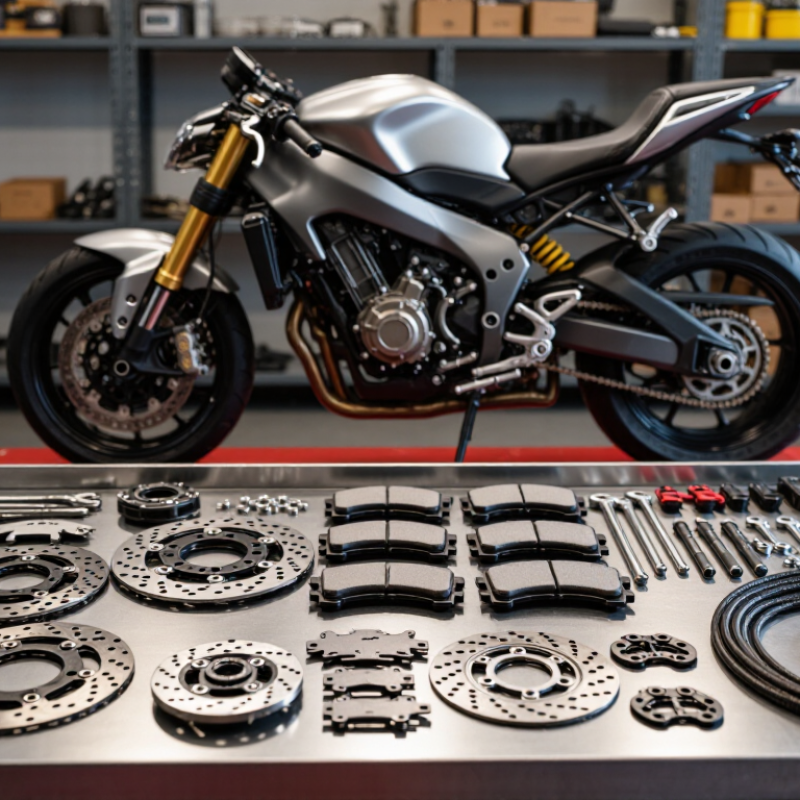
Choosing motorcycle brake parts in 2026 starts with identifying the exact brake system, not searching by appearance. Record the motorcycle’s year, model, engine version, and VIN. Then check the owner’s manual and the original component markings. A front single-disc system differs from a twin-disc setup, even when the calipers look similar. Measure rotor diameter, thickness, bolt spacing, and offset. Confirm the pad shape and caliper piston layout.
Do not overlook electronics. An ABS-equipped motorcycle needs compatible tone rings, wheel-speed sensors, and correct sensor clearance. Linked or combined braking systems may also require specific hoses and control components. Brake fluid specifications matter too. Using the wrong fluid can damage seals and reduce braking performance. NHTSA’s 2022 Traffic Safety Facts recorded 6,084 motorcyclist fatalities in the United States, showing why compatibility checks cannot be treated as paperwork.
Independent data supports careful specification. An Insurance Institute for Highway Safety study found motorcycles with ABS had a 22% lower fatal crash rate than comparable motorcycles without it. That figure does not make every ABS part interchangeable. It only reinforces the value of a correctly functioning system. A common mistake is trusting a parts listing that says “fits your motorcycle.” Fitment databases can contain outdated or incomplete information. Recheck every measurement against the service manual, especially after changing wheels, forks, or calipers. If the hydraulic layout is unclear, have a qualified technician inspect it before riding. Small differences matter.
Identify Your Motorcycle’s Brake System and Compatibility Requirements
Brake-fluid specifications are one important compatibility check when selecting calipers, master cylinders, seals, and replacement fluid. DOT 3, DOT 4, and DOT 5.1 are glycol-based fluids, while DOT 5 is silicone-based and must not be mixed with glycol-based fluid. Always match the motorcycle manufacturer’s specified DOT rating and verify the component seal material before installation. Values shown are minimum boiling-point requirements from FMVSS 116.
Choosing motorcycle brake parts in 2026 requires more than comparing prices. Performance, durability, and safety change with riding conditions. NHTSA’s 2022 Traffic Safety Facts reported 5,932 motorcyclist fatalities in 2021. It also found that motorcyclists faced a fatality risk nearly 28 times higher than passenger-car occupants per vehicle mile. Small braking weaknesses matter.
Start with the riding environment. Sintered pads usually tolerate high temperatures and repeated mountain braking better. Organic pads can feel smoother during commuting, but they may wear faster under heavy loads. Wet roads demand stable friction and clear modulation. Check the manufacturer’s friction range, rotor compatibility, and minimum rotor thickness. Do not treat “high performance” as universal. I have seen aggressive pads feel excellent when hot, then feel wooden during a cold morning ride.
Durability depends on heat cycles, contamination, and maintenance. A 2013 IIHS analysis linked motorcycle antilock braking systems with a 22% lower fatal crash rate. That does not make worn pads safe. Inspect pad thickness, rotor scoring, fluid color, and lever travel before installation. Choose parts meeting applicable regulatory and testing requirements, then bed them in gradually on a clean road. According to braking-system test guidance, repeated stops can create heat fade, even when parts are new. One overlooked detail: luggage changes stopping behavior. Recheck braking after loading the motorcycle, because confidence often arrives before proper testing.
Choosing motorcycle brake parts in 2026 starts with exact verification, not attractive packaging. Measure rotor diameter, thickness, bolt pattern, pad shape, and caliper clearance. Check the motorcycle’s model year and production variation. Small differences matter. A part can fit physically yet alter lever travel or braking balance. Use the service manual, technical drawings, and reliable application data. Do not rely on a marketplace photograph alone. I once accepted a similar-looking pad set during a rushed repair. It fitted, but the backing plate sat incorrectly. That mistake changed my inspection habits.
Certification deserves direct scrutiny. Look for traceable approval marks, testing references, and a certificate number that can be verified independently. The document should identify the manufacturer, product code, test standard, and validity period. Vague claims such as “racing quality” prove little. Ask for friction data, temperature limits, and material information when available. Keep invoices and batch details. They help connect a failed part to its source. Certification is not a guarantee of perfect installation. It is evidence of controlled evaluation.
Manufacturer quality appears in consistency, documentation, and support after purchase. Serious producers publish inspection procedures, tolerances, storage guidance, and replacement advice. Their technical staff should answer precise questions without avoiding them. Examine sealed packaging, clean machining, uniform pad surfaces, and clear markings. Reject damaged or suspicious parts. Installation still requires correct torque, bedding, and a leak check. My process is not flawless; I sometimes spend too long comparing minor details. Yet careful verification costs less than uncertain braking performance. Independent mechanic feedback can expose weaknesses that catalog pages hide.
| Brake Part | Specifications to Verify | Relevant Standards or Regulations | Quality Evidence to Request | Important Safety Checks |
|---|---|---|---|---|
| Brake Pads | Vehicle application, pad shape, backing-plate dimensions, friction-material thickness, wear-indicator position, and caliper compatibility. | UN ECE R90 may apply to replacement brake lining assemblies in markets that adopt it. Local vehicle regulations and the service manual also apply. | Lot traceability, friction and compressibility test reports, corrosion-protection details for the backing plate, and documented production inspection. | Do not select pads only by appearance. Confirm the correct front or rear position and replace pads as an axle set when required by the service instructions. |
| Brake Discs and Rotors | Outside diameter, minimum thickness, mounting-hole pattern, center bore, offset, rotation direction, floating or fixed design, and ABS-ring compatibility. | UN ECE R90 can cover certain replacement discs or drums where adopted. Dimensional and material requirements remain vehicle-specific. | Material specification, hardness or mechanical test results, run-out inspection, dimensional inspection, surface-finish control, and batch identification. | Compare measured thickness with the vehicle manufacturer’s minimum service limit. Check lateral run-out, cracks, deep scoring, heat spots, and correct ABS sensor clearance. |
| Brake Shoes and Drums | Shoe width and diameter, lining arc, spring and pin locations, drum inside diameter, maximum service diameter, and leading/trailing shoe arrangement. | UN ECE R90 may apply to replacement drum-brake lining assemblies in applicable markets. | Lining bond or rivet inspection, friction-material test data, dimensional checks, heat-resistance testing, and traceable batch records. | Never exceed the drum’s maximum permitted inside diameter. Verify that return springs and adjusters are correctly installed and undamaged. |
| Brake Calipers | Mounting spacing, piston diameter and count, pad dimensions, disc thickness range, hydraulic-port thread, seal specification, and clearance to the wheel. | UN ECE R78 addresses braking requirements for motorcycles in markets that adopt it. Vehicle-specific approval requirements may also apply. | Pressure-leak testing, piston-return testing, seal-material identification, corrosion testing, and inspection of threaded ports and mounting surfaces. | Confirm hydraulic compatibility with the existing master cylinder. Check for fluid leaks, seized pistons, uneven pad wear, and secure mounting torque. |
| Master Cylinders | Bore diameter, lever or pedal connection, reservoir position, piston stroke, hydraulic-port thread, switch connection, and handlebar mounting dimensions. | UN ECE R78 may be relevant to motorcycle braking performance. The replacement must maintain the original system’s hydraulic design and control characteristics. | Pressure-hold and leakage tests, bore and piston measurements, seal compatibility data, reservoir-cap inspection, and documented functional testing. | An incorrect bore can change lever travel and braking force. Verify that the brake-light switch, reservoir diaphragm, and fluid level markings are compatible. |
| Brake Hoses and Lines | Overall length, hose-end angle, fitting thread, banjo size, routing, bend radius, abrasion protection, and clearance from exhaust, suspension, and steering parts. | FMVSS 106 is a U.S. brake-hose standard. Other markets may require different national or regional approvals. | Burst-pressure testing, whip and tensile testing, volume-expansion data, permeability testing, fitting-crimp inspection, and approved-fluid compatibility results. | The hose must not become taut at full steering lock or full suspension travel. Replace damaged, swollen, cracked, or leaking hoses immediately. |
| Brake Fluid | Required fluid classification, dry and wet boiling points, viscosity range, container size, storage date, and compatibility with seals and ABS components. | FMVSS 116 defines DOT 3, DOT 4, DOT 5, and DOT 5.1 requirements. ISO 4925 defines internationally used brake-fluid classes. | Certificate of analysis, batch number, sealed packaging, water-content control, boiling-point test results, and clearly stated fluid standard. | DOT 5 is silicone-based and must not be treated as interchangeable with glycol-based DOT 3, DOT 4, or DOT 5.1 fluids. Follow the reservoir cap or service manual. |
| ABS Sensors and Tone Rings | Sensor type, connector, cable length, mounting position, tone-ring tooth count, ring diameter, run-out, and specified air gap. | The complete motorcycle must meet the applicable ABS and motorcycle braking requirements in its market; the service manual defines system-specific values. | Electrical resistance or signal testing, connector sealing inspection, tone-ring dimensional inspection, and vibration and temperature test evidence. | Keep the sensor cable away from moving or hot components. Incorrect air gap, damaged wiring, or a bent tone ring can trigger an ABS fault. |
Reliable suppliers matter more than low prices. NHTSA’s Traffic Safety Facts 2022 recorded 6,084 motorcyclist deaths in the United States. That figure makes brake quality a serious purchasing decision.
Choose suppliers who provide batch numbers, material specifications, fitment charts, and test documentation. Check whether their parts match recognized requirements, such as FMVSS No. 122 or UNECE Regulation No. 78. A professional supplier should answer technical questions clearly. Vague catalog descriptions are warning signs. The cheapest option can become an expensive mistake.
Correct installation is equally important. Confirm the motorcycle model, production year, brake position, and rotor dimensions before opening the package. Inspect pads for cracks and check the rotor for deep grooves or discoloration. Clean the caliper contact points carefully.
Use the service manual’s torque values. Do not guess. Install the specified brake fluid, then bleed the system until the lever feels firm. Follow the supplier’s bedding-in procedure on a safe road. A part may be genuine, yet poor installation can still create uneven braking. I still recheck fasteners after the first short ride; confidence is not proof.
Tips:
Keep invoices and installation records for traceability. Photograph old parts before removal. Compare pad shape and backing-plate holes with the new set.
Avoid mixing unknown friction materials on one axle. If the lever remains soft, stop riding and seek qualified inspection.
Small doubts deserve attention.
Record the year, model, engine version, and VIN. Check the owner’s manual and original component markings. Details matter.
Measure rotor diameter, thickness, bolt spacing, and offset. Also check pad shape, piston layout, and caliper clearance. A visual match is not enough.
Not always. A single-disc system differs from a twin-disc system. Confirm the hydraulic layout and mounting dimensions before installation. Appearance can mislead.
Confirm compatibility with tone rings, wheel-speed sensors, and sensor clearance. Wheel changes can affect these measurements. Recheck everything.
Sintered pads usually handle repeated mountain braking and high temperatures well. Organic pads may feel smoother during commuting. They can wear faster under heavy loads.
Check pad thickness, rotor scoring, fluid color, and lever travel. Also inspect seals, hoses, and possible contamination. Worn parts remain unsafe.
Look for traceable approval marks, test references, and verifiable certificate numbers. The documents should identify the product code, test standard, and validity period. Vague performance claims prove little.
Use the specified torque, check for leaks, and bed the parts gradually. Perform repeated stops on a clean road without creating excessive heat. New parts still need testing.
Yes. Added luggage changes weight distribution and stopping behavior. Test braking again after loading the motorcycle. Confidence can arrive too early.
Stop the installation and ask a qualified technician to inspect it. A parts listing may contain outdated information. I can still miss small differences.
Choosing the right Motorcycle Brake Parts in 2026 begins with understanding your motorcycle’s braking system, including its brake type, model specifications, mounting points, and compatibility requirements. Evaluate brake pads by material and friction characteristics, while also considering rotor design, caliper construction, and brake line performance. The ideal combination should match your motorcycle’s weight, power, riding style, traffic conditions, and climate.
Safety and long-term value are equally important. Compare stopping performance, heat resistance, durability, noise control, and maintenance needs rather than focusing only on price. Before purchasing, verify dimensions, fitment data, operating limits, and applicable safety certifications. Select parts from suppliers that provide clear product information, quality assurance, and dependable customer support. Finally, install every component according to the motorcycle’s service instructions, inspect the complete braking system, and test it carefully in a controlled area before normal riding. Proper selection and installation can improve braking confidence, reliability, and overall riding safety.

VETOR GROUP