A Cylinder Head Gasket must seal combustion pressure, coolant, and oil between the cylinder head and engine block. A small sealing failure can lead to overheating, fluid contamination, or costly engine damage. For global buyers, choosing a manufacturer is therefore not just a price comparison. Material quality, machining consistency, application coverage, and traceable quality controls all matter.
The scale of the vehicle industry makes supplier evaluation important. OICA reported 93.5 million motor vehicles produced worldwide in 2023. S&P Global Mobility also reported that the average age of light vehicles in the United States reached 12.6 years in 2024. These figures show a large production base and an aging vehicle fleet, though they do not measure gasket demand directly. That distinction matters. Buyers should compare manufacturers using verifiable product specifications, test methods, warranty terms, and delivery performance—not market-size claims alone.
This guide examines manufacturers serving international buyers, from established original-equipment suppliers to aftermarket specialists. It considers material options, engine coverage, quality documentation, and practical sourcing factors. Ask for evidence. A polished catalog is not enough. Even detailed supplier data can leave unanswered questions about long-term field performance, so independent checks and clear technical discussions remain worthwhile.
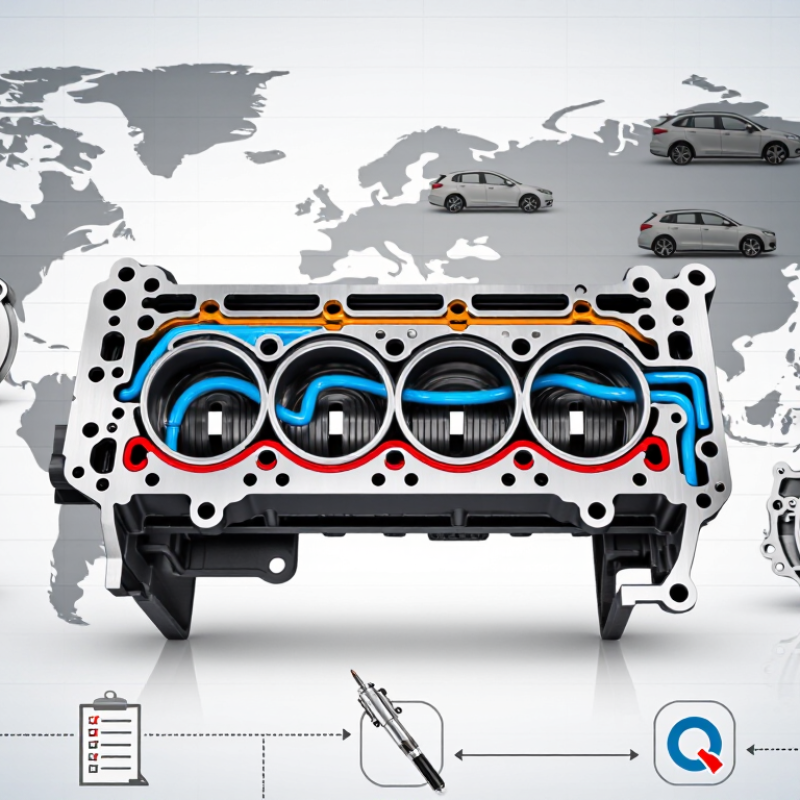
What a Cylinder Head Gasket Does and Why It Matters
A cylinder head gasket creates a seal between the engine block and cylinder head. It separates combustion pressure, coolant, and engine oil. This small component manages extreme heat, vibration, and pressure. When it seals correctly, compression stays inside the cylinders. Coolant also remains in its proper passages. A damaged gasket can cause white exhaust smoke, bubbling coolant, or milky oil. Sometimes, the first warning is only a slow coolant loss.
Material selection matters for global buyers. Multi-layer steel gaskets suit many modern engines, while composite designs may fit specific older applications. The correct thickness affects compression and valve timing. Buyers should verify engine codes, bore diameter, bolt patterns, and operating temperatures. Manufacturers should provide dimensional checks, material details, and traceable inspection records. A clean sealing surface is essential. Even a small scratch can create a leak. In real workshops, rushed surface preparation remains a common failure point.
Tips: Confirm cylinder-head flatness before installation. Follow the specified bolt sequence and torque stages. Never reuse stretch bolts unless the service instructions allow it. Store gaskets flat and dry, away from oil and moisture. Packaging should protect delicate sealing beads during long-distance shipping. Some recommendations may seem obvious, but overlooking one detail can ruin a complete repair. Always compare laboratory data with actual field conditions. Test results are useful, yet they do not replace careful fitting.
| Buyer Evaluation Area | What the Gasket Does or What to Assess | Useful Evidence or Questions for Suppliers |
|---|---|---|
| Combustion sealing | Seals the joint between the cylinder head and engine block to help contain combustion pressure within each cylinder. | Ask how the design controls sealing around cylinder bores and what validation is available for the intended engine and operating conditions. |
| Oil and coolant separation | Seals oil and coolant passages at the head-to-block joint and helps prevent fluid leakage or unwanted cross-flow. | Confirm that passage locations, sealing features, and the gasket outline match the exact engine configuration. |
| Gasket construction | Many modern engines use multi-layer steel (MLS) designs. Other applications may use composite or specialized metal constructions; the suitable design depends on the engine and joint requirements. | Request the material and layer description, coating details where applicable, and confirmation of application compatibility. |
| Dimensional accuracy | Bore openings, fluid passages, bolt holes, and locating features must align with the engine mating surfaces. | Check controlled drawings, inspection records, revision management, and sample approval against the specified engine application. |
| Surface and joint requirements | Sealing performance depends on the gasket design and the condition of the mating surfaces, including their finish, flatness, and assembly requirements. | Ask for installation guidance and the surface-finish or flatness requirements applicable to the specific engine and gasket design. |
| Thermal and chemical suitability | Materials and coatings must suit the temperatures, fluids, and service conditions expected at the head-to-block joint. | Request application-specific material information and test documentation; avoid relying on a generic temperature or compatibility claim without defined conditions. |
| Manufacturing and quality control | Consistent cutting, forming, coating, and inspection help ensure parts conform to the approved design from batch to batch. | Review the quality system, lot traceability, nonconformance process, inspection plan, and change-control procedure. Verify certifications directly with the issuing body when required. |
| Testing and validation | Testing can provide evidence that a design meets defined requirements, but results apply only to the tested part, method, and conditions. | Ask for test methods, acceptance criteria, sample identification, and reports relevant to the requested application. |
| Global sourcing and logistics | International buyers need clear product identification and dependable documentation to reduce application, customs, and replenishment issues. | Confirm part-number cross-references, packaging and labeling, country-of-origin documentation, lead times, minimum order quantities, and export paperwork. |
| Why correct fit matters | A damaged, incorrectly specified, or poorly installed head gasket can contribute to compression loss, fluid leakage, or mixing of oil and coolant. Diagnosis should consider the full engine and joint condition. | Match the gasket to the exact engine variant and follow the engine maker’s service procedure, including specified fasteners and tightening sequence. |
Note: Gasket construction, materials, specifications, and validation requirements vary by engine application. Confirm technical details against the relevant engine documentation and supplier records.
Compare bore diameter, thickness, bolt-hole positions, and passage layout with reliable engine service data. Small mismatches matter.
No. Engine configuration and exact measurements matter. Check whether the cylinder head or block has been machined, too.
There is no single best material. Multi-layer steel and composite designs suit different temperatures, pressures, and surface conditions.
Ask for dimensional inspection records, material details, batch traceability, and test methods for heat, pressure, and fluid exposure. Paperwork alone is not proof.
Request samples made through the same production process as the planned order. A sample can look right, yet later parts may differ.
Clean sealing surfaces and specified bolt procedures help support a reliable seal. A checklist cannot catch every mismatch.
Check the edges for damage and the packaging for moisture protection. Confirm the part’s dimensions before installation.
Confirm lead times in writing and review inspection plans. A small trial order can reveal issues that polished paperwork may hide. Still, one order is not a guarantee.
A Cylinder Head Gasket seals the joint between an engine block and cylinder head, helping contain combustion pressure and separate engine fluids. Its reliability is essential to engine performance, efficiency, and durability. Modern gaskets may use materials such as layered steel, composite fibers, or other engineered constructions, each suited to particular operating conditions and engine designs. Choosing the right material and specification can help ensure a dependable seal.
Global buyers should assess manufacturers for consistent production quality, technical expertise, clear product documentation, and the ability to supply parts that match specific engine requirements. Compare dimensional accuracy, material options, quality-control practices, testing procedures, delivery capability, and after-sales support. Check that products are designed to meet relevant quality standards and fit the intended application. A careful comparison helps buyers select a supplier that offers dependable compatibility, performance, and long-term value.

 VETOR GROUP