 VETOR GROUP
1 / 1
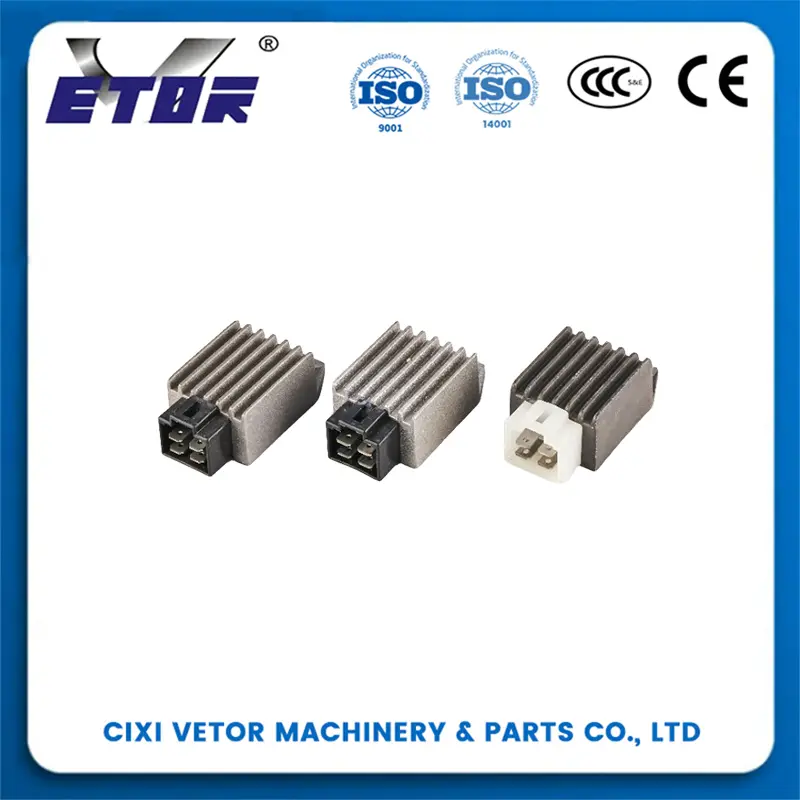
The CG125 rectifier is designed to seamlessly integrate with the motorcycle's electrical setup. It typically features a compact, heat-dissipating housing, often made of aluminum alloy or a high-quality plastic with heat-sinking fins. Internally, the rectifier contains semiconductor diodes (usually silicon diodes) arranged in a specific configuration, like a bridge rectifier circuit. These diodes allow current to flow in only one direction, effectively converting the AC input from the alternator into DC output.
With high-quality semiconductor components, the CG125 rectifier can efficiently convert AC to DC, ensuring that the battery receives a consistent and stable charging current.
Built to withstand the harsh operating conditions of a motorcycle, including vibrations, temperature fluctuations, and electrical surges. The robust housing and internal component design contribute to long-term reliability, reducing the risk of electrical system failures.
Many modern CG125 rectifiers are equipped with built-in protection mechanisms. They can prevent over-voltage situations that could damage the battery or other electrical components, as well as handle occasional over-current events without failing immediately.
Specifically engineered for CG125 motorcycles, these rectifiers offer perfect compatibility with the motorcycle's alternator and electrical system. This ensures seamless operation and eliminates the need for extensive modifications during installation.
The primary function of the CG125 rectifier is to charge the motorcycle's battery while the engine is running. This ensures that the battery remains in a charged state, providing power for starting the engine and running electrical systems when the engine is off.
It supplies DC power to various electrical components on the CG125, such as headlights, taillights, turn signals, horn, and the ignition system. Stable DC power is essential for the proper and consistent operation of these components.
For riders who install additional electrical accessories on their CG125, like GPS units, phone chargers, or auxiliary lights, the rectifier provides the necessary DC power to keep these accessories functioning.
| Specification Item | Details |
|---|---|
| Input Voltage | AC voltage output from the CG125's alternator, typically varying with engine RPM (e.g., 6V - 18V AC) |
| Output Voltage | Stable 12V DC (nominal) for charging the motorcycle's 12V battery |
| Output Current Capacity | Usually ranges from 3A to 5A, depending on the specific model and design, to meet the power demands of the motorcycle's electrical system |
| Operating Temperature Range | -20°C to +80°C, allowing it to function reliably in different environmental conditions |
| Housing Material | Aluminum alloy or high-quality heat-resistant plastic with heat-sinking fins |
| Connector Type | Multi-pin electrical connector, commonly a 3-pin or 4-pin configuration, designed to match the CG125's wiring harness |
| Efficiency | Typically above 85%, indicating a high level of conversion efficiency from AC to DC |
| Dimensions (approximate) | Length: 40 - 60mm, Width: 30 - 40mm, Height: 20 - 30mm |
| Weight | Around 80 - 120 grams |
| Certification | May comply with relevant electrical safety standards, such as ISO 9001 for quality management and RoHS for environmental protection |
The main function of the rectifier is to convert the alternating current (AC) generated by the motorcycle's alternator into stable direct current (DC) to charge the 12V battery and power the onboard electrical systems.
It features built-in over-voltage and over-current protection mechanisms that prevent excessive voltage or sudden power surges from damaging the battery and other sensitive electrical components.
The rectifier is housed in an aluminum alloy or high-quality heat-resistant plastic shell equipped with integrated heat-sinking fins to quickly dissipate heat and ensure reliable performance under extreme conditions.
Yes, the device is designed to work reliably in severe weather conditions, with an operational temperature range spanning from -20°C to +80°C.
The rectifier operates with a power conversion efficiency of typically above 85%, ensuring that the energy transfer from the alternator to the battery is highly effective with minimal heat loss.