 VETOR GROUP

1 / 1
Motorcycle brake pads are key components in the braking mechanism. When the brake lever is activated, these pads clamp onto the brake disc (in disc brake systems) or interact with other braking components, creating friction. This friction converts the motorcycle's kinetic energy into heat, thereby reducing the vehicle's speed. They are designed to withstand high temperatures and repeated use, ensuring reliable braking performance.
The high-quality friction material provides strong and consistent braking force, allowing for quick and effective stopping of the motorcycle, which is essential for safety.
Made from materials that can endure the intense heat and friction generated during braking, these pads have a long service life, reducing the frequency of replacements.
Well-designed brake pads produce minimal noise and vibration during braking, enhancing the riding comfort and reducing distractions.
Available in various specifications to fit different motorcycle models, ensuring a proper fit and optimal braking performance for specific bikes.
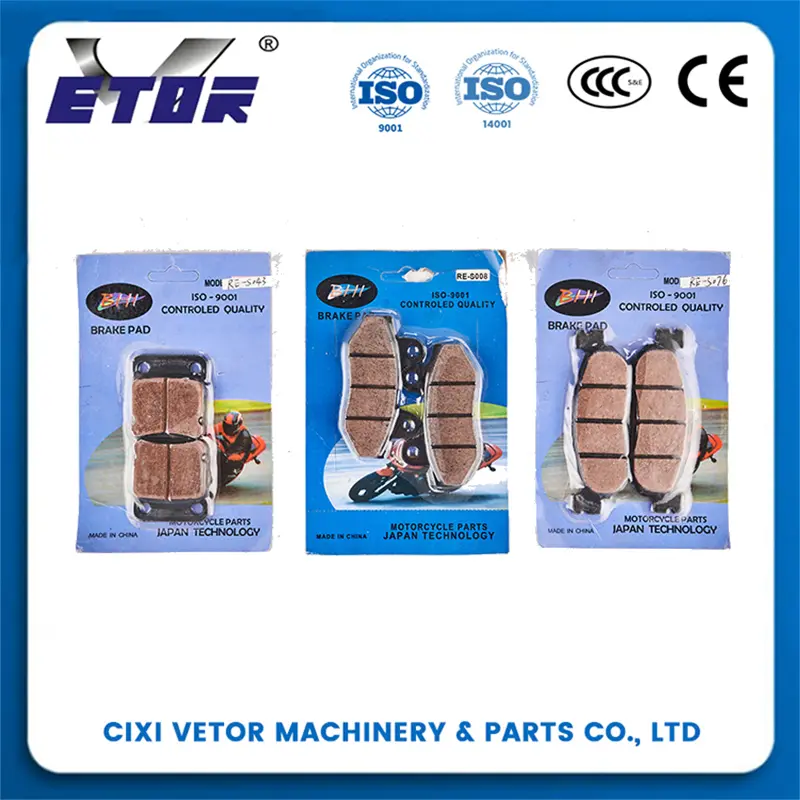
| Specification Item | Details |
|---|---|
| Product Name | Motorcycle Brake Pads |
| Material | Typically composed of a combination of organic compounds, metals, and friction modifiers |
| Compatibility | Varies by model; designed to fit specific motorcycle brake systems |
| Operating Temperature | Can withstand temperatures up to 600°C (varies by material composition) |
| Service Life | Approximately 10,000 - 30,000 kilometers depending on riding conditions and usage |
| Installation | Installed in the motorcycle's brake caliper, clamping onto the brake disc |
| Certification | May comply with international braking safety standards (e.g., ECE R90) |
| Color | Usually dark in color due to the friction material, with metal backing plates |
| Package Includes | A set of brake pads (quantity depends on the motorcycle's brake system, usually enough for one or two wheels) |
How do motorcycle brake pads work?
When the brake lever is activated, the pads clamp onto the brake disc or interact with braking components. This creates friction, converting the motorcycle's kinetic energy into heat, which reduces the vehicle's speed.
What are the primary materials used in these brake pads?
These brake pads are typically composed of a combination of organic compounds, metals, and friction modifiers to ensure stable performance under high heat.
What is the estimated service life of these brake pads?
They generally last between 10,000 and 30,000 kilometers. The exact duration depends on the riding conditions and usage habits.
What maximum temperature can these brake pads withstand?
They are designed to handle extreme temperatures up to 600°C, depending on the specific material composition.
Are these brake pads compatible with all motorcycle models?
Compatibility varies by model. They are manufactured in various specifications designed to fit specific motorcycle brake systems for optimal safety and performance.